
Japan · Quest
Who would you be if you could begin again?
The Hidden Japan
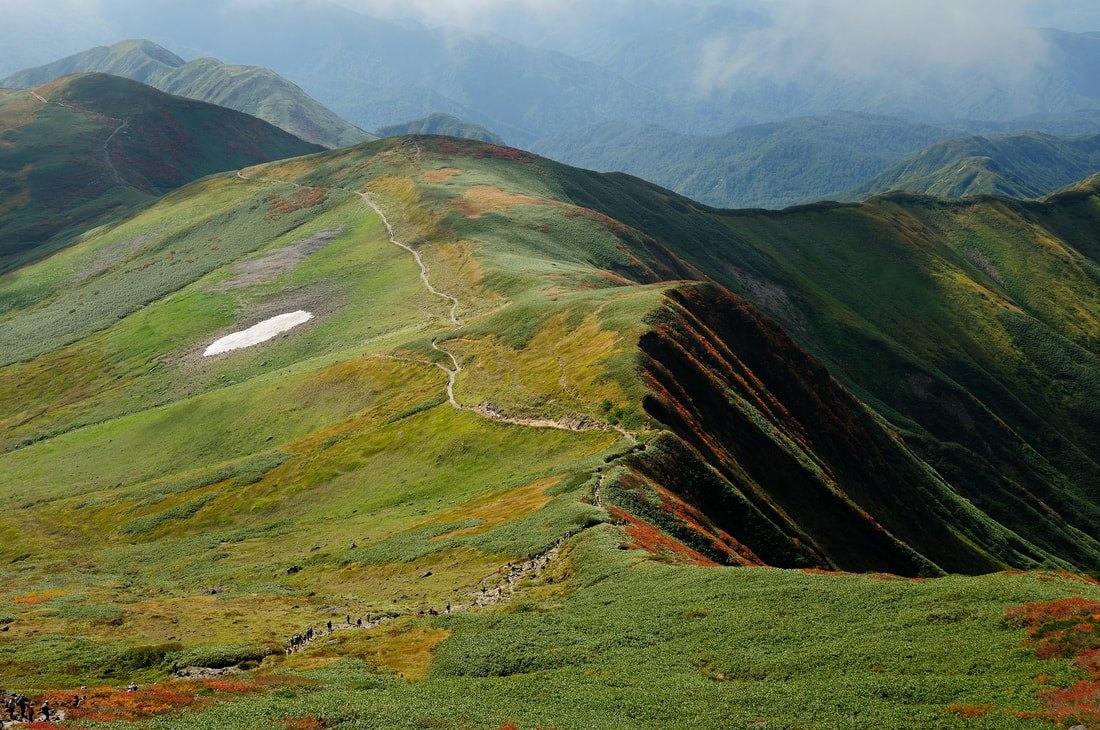
Many visitors to Japan follow the same line on the map: Tokyo, Kyoto, perhaps Osaka, and home. Far fewer travel some 300 miles north, to Yamagata, where three sacred mountains stand side by side above the rice fields: Haguro, Gassan and Yudono. Together they are called Dewa Sanzan. A prince named Hachiko first opened them for worship in 593, and for 1,400 years they have been walked as a single pilgrimage through the present, the past and the future.
The people who keep this pilgrimage alive are the Yamabushi, mountain ascetics who practice Shugendō. It’s a tradition that draws together Japan’s ancient reverence for mountains, the Shinto understanding of kami present in the natural world, esoteric Buddhism and threads of Taoist practice. Its teaching rests on a remarkable idea: that you can pass through a death and a rebirth within this lifetime, and walk out of the mountains as someone new.
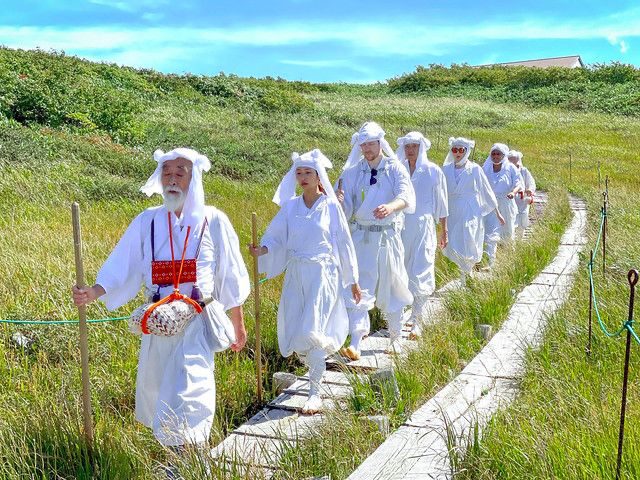
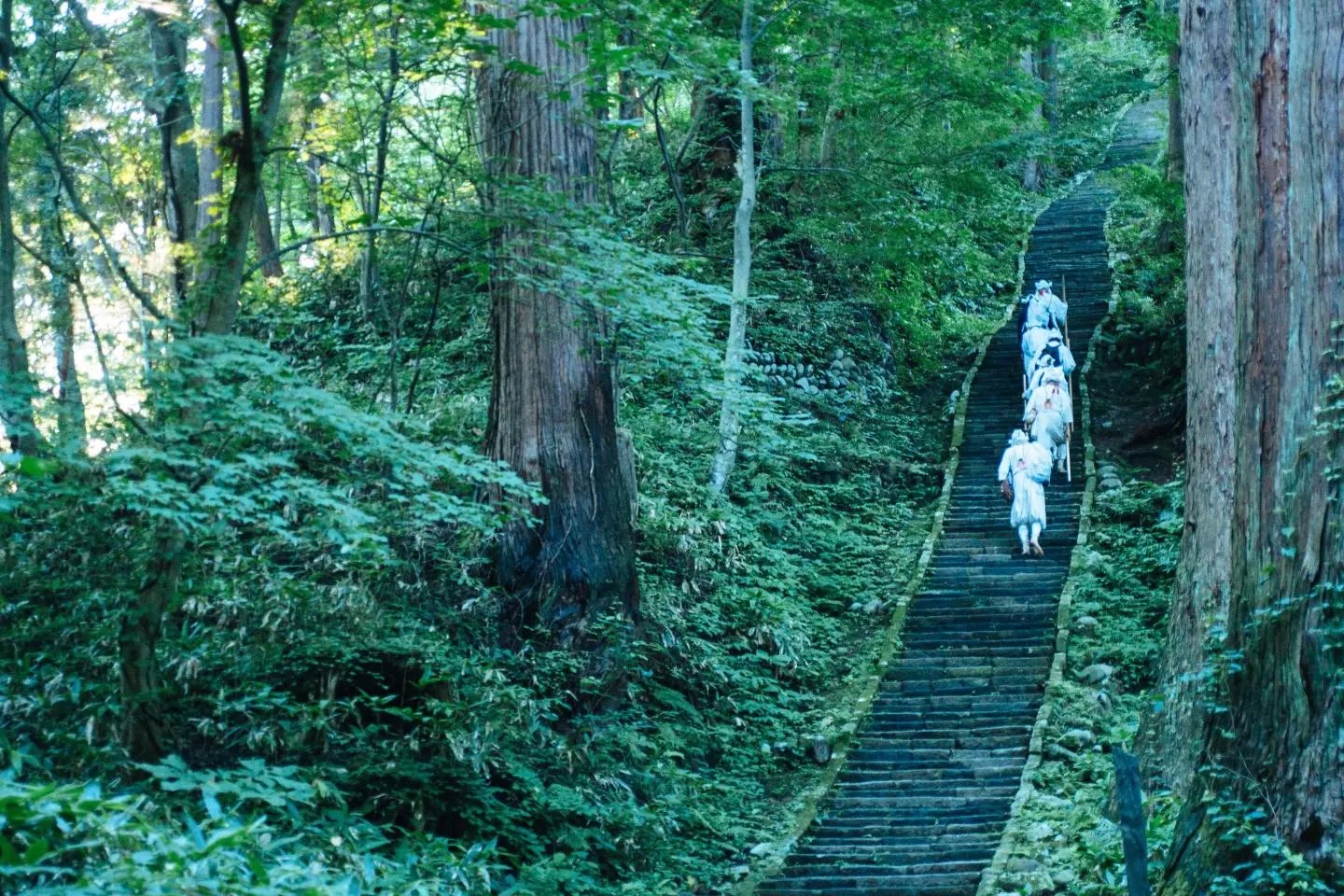
A thousand years ago, Yamabushi lived as hermits on these slopes. Many today lead more typical lives, with jobs and families, and return to the mountains to train and purify themselves. Pilgrims still walk the old routes dressed in white, the color of death in Japan, and of beginning again.
It’s a different Japan from the one many visitors see: slower, older and very quiet.
You don’t have to die to be reborn.
What part of yourself have you been carrying that’s ready to be laid down?
The Door
On the trails of Mount Haguro, you may hear the Yamabushi before you see them: the low call of a conch shell, the horagai, rolling through the cedars. It’s blown to purify the path and to let the gods know someone is coming.
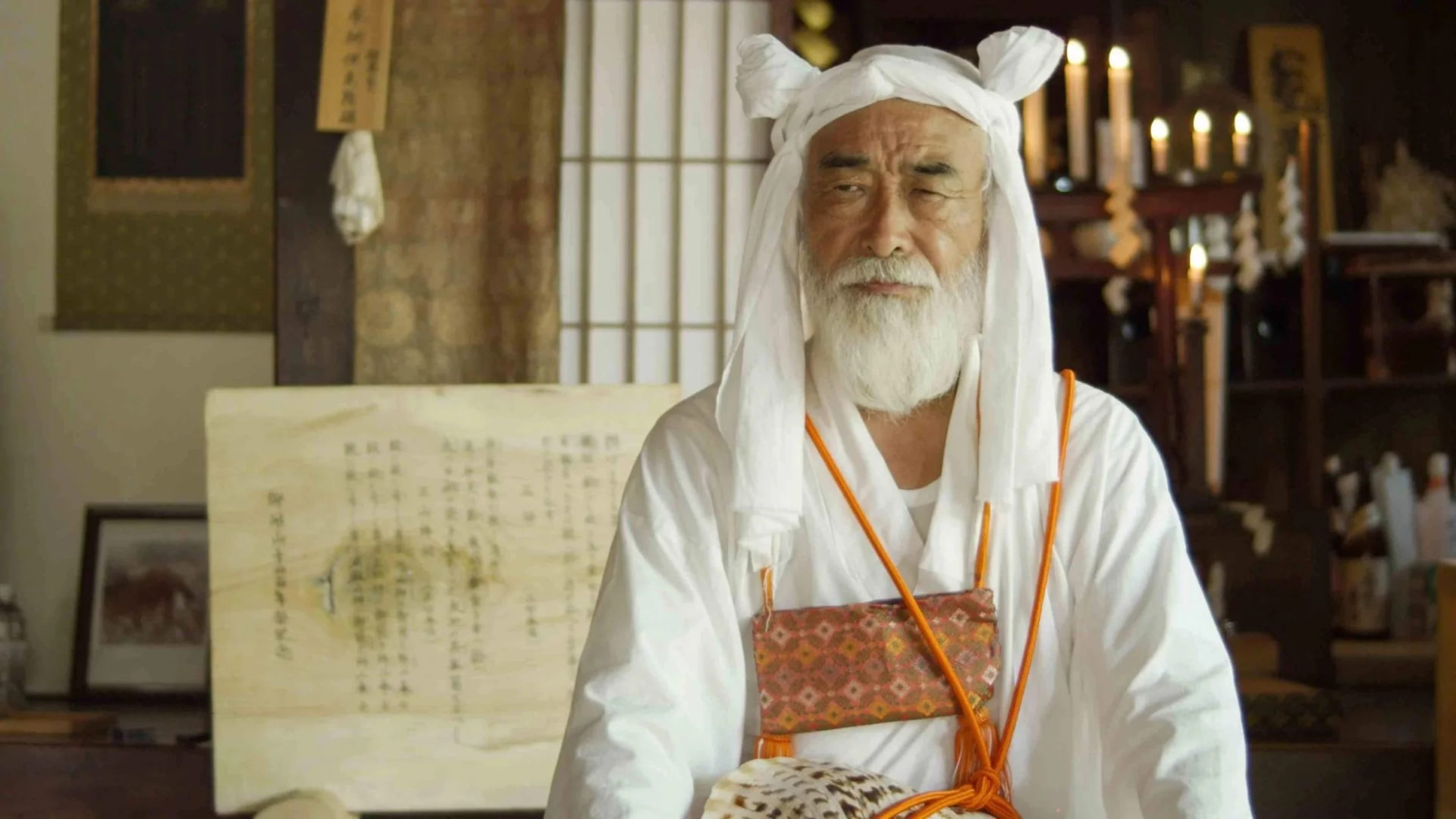
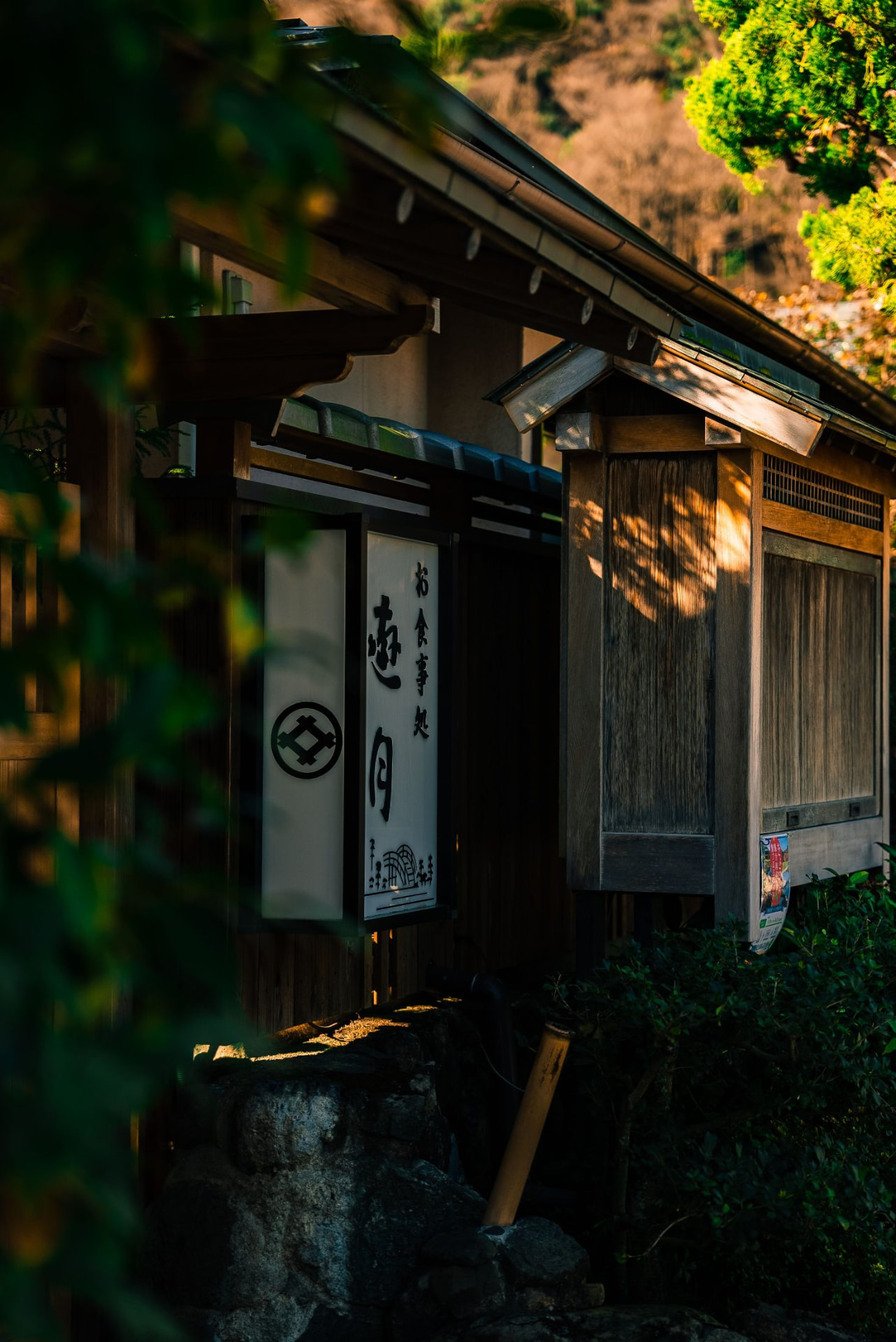
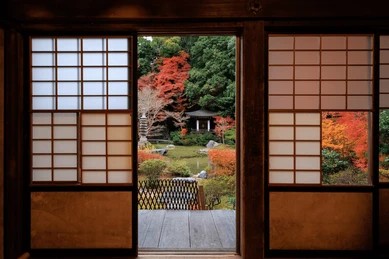
Abroad has spent time on these mountains with Tak-san, who introduced us to Zen and to the Yamabushi path. Over time, those relationships led us to Master Hoshino, a Yamabushi master whose family has kept a pilgrim lodge on Haguro for thirteen generations, and who now hosts our groups. Lodges like his have welcomed pilgrims here for more than 350 years, and life inside still keeps an old rhythm: tatami floors, a shared bath, simple food from the mountains, early sleep and earlier waking. We are welcomed as students rather than guests.
There are mountains you visit, and mountains you’re welcomed onto.
Uketamo
Shugendō isn’t learned from scripture. It’s learned through the body. The Yamabushi walk demanding mountain routes, keep long silences, chant, purify and sit with discomfort, and the mountains themselves are understood as the teachers. Even their prayers turn outward, toward health, the balance of the natural world and peace. Nobody goes up to conquer a summit. They go to come back changed.
At the center of that practice is one word: uketamo, often translated as “I accept.” It’s the reply to whatever the mountain offers: rain, fatigue, uncertainty, an instruction you don’t yet understand. It isn’t resignation. It’s a discipline of meeting what’s in front of you fully before deciding how to respond.
It’s a striking contrast to how many of us learn to lead. Leadership development tends to mean discussion, frameworks and reflection. Here, there’s very little talking, and the lesson arrives through your legs, your breath and the weather. Even meditation works differently. It isn’t about how you sit or where you place your hands. It’s about being fully present in the forest, until birdsong, water and wind come in sharper than they have in years.
What would change in how you lead if you said “I accept” before you said “I disagree”?
Beginner’s Mind
Zen comes at the same truth from the other direction. In the temple, there’s nothing to climb. You sit, and you begin again, breath by breath.
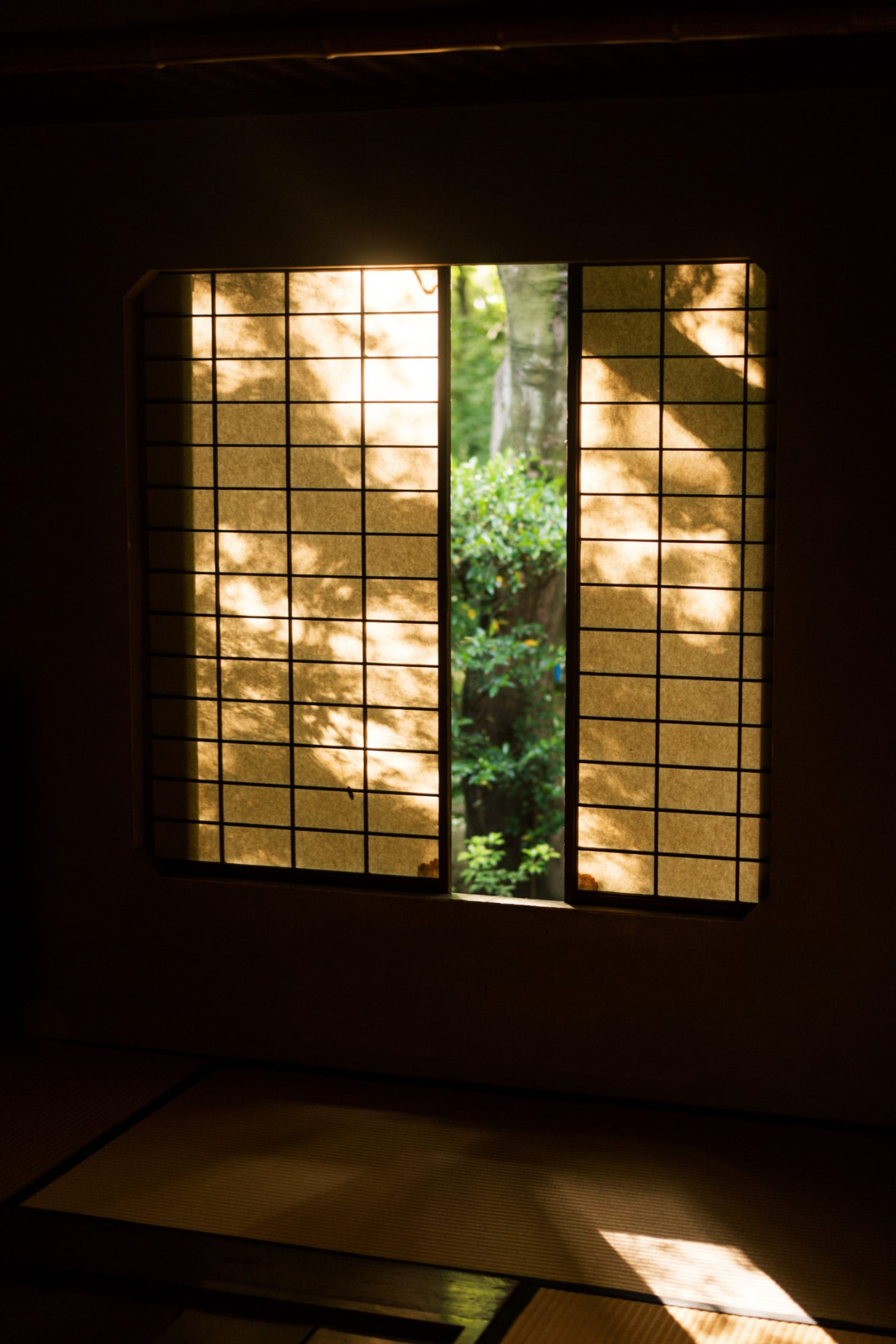
Zen came to Japan from China more than 800 years ago, and it shaped far more than its temples. You can see it in Japanese gardens, in the tea ceremony, in calligraphy, in the way a meal is served and the way a room is left mostly empty. From the tea ceremony comes a phrase, ichigo ichie, “one time, one meeting.” Each gathering happens once and will never happen again in quite the same way.
The practice itself is disarmingly simple. In zazen, you sit upright and still and pay attention to the breath. You aren’t trying to empty the mind or reach some special state. When a thought arrives, you notice it and come back. In many temples, the sitting is followed by kinhin, a slow walking meditation in which each step keeps time with a breath.
Zen treats the ordinary as practice too. Dōgen, who founded the Sōtō school of Zen in Japan in the 13th century, wrote that cooking a meal for the monks was as much spiritual training as sitting in meditation. Washing a bowl, sweeping a floor, eating a bowl of rice: in the temple, each gets your full attention, and none is beneath it.
Zen teachers speak of shoshin, beginner’s mind: meeting each moment as though for the first time, without the certainty of the expert. Shunryu Suzuki, one of the teachers who brought Zen to the West, put it plainly: the beginner sees many possibilities, the expert sees few. For people whose lives are built on knowing the answer, it can be the hardest practice of all.
What would you notice if you stopped being the expert in the room?
North to the Rice Fields
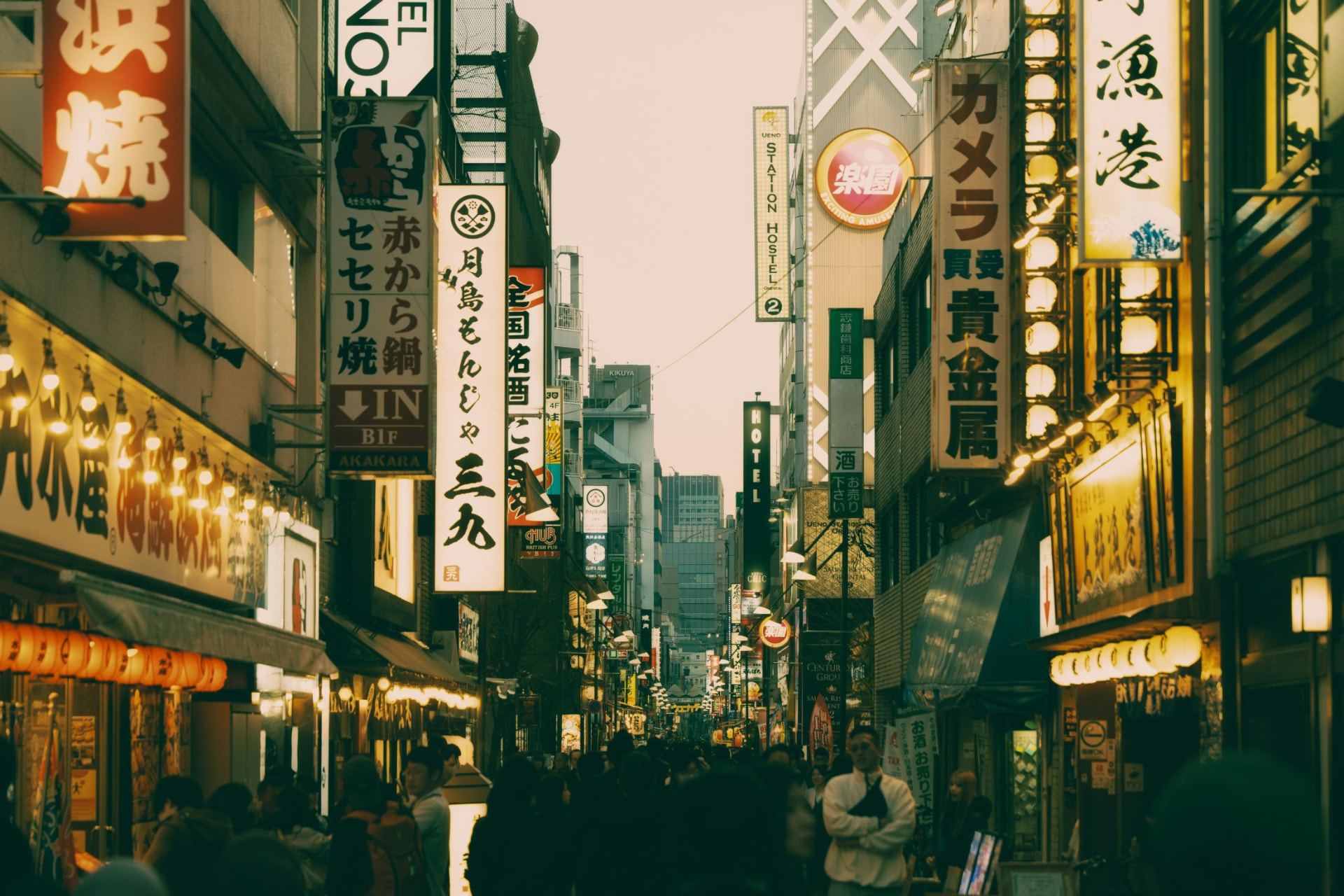
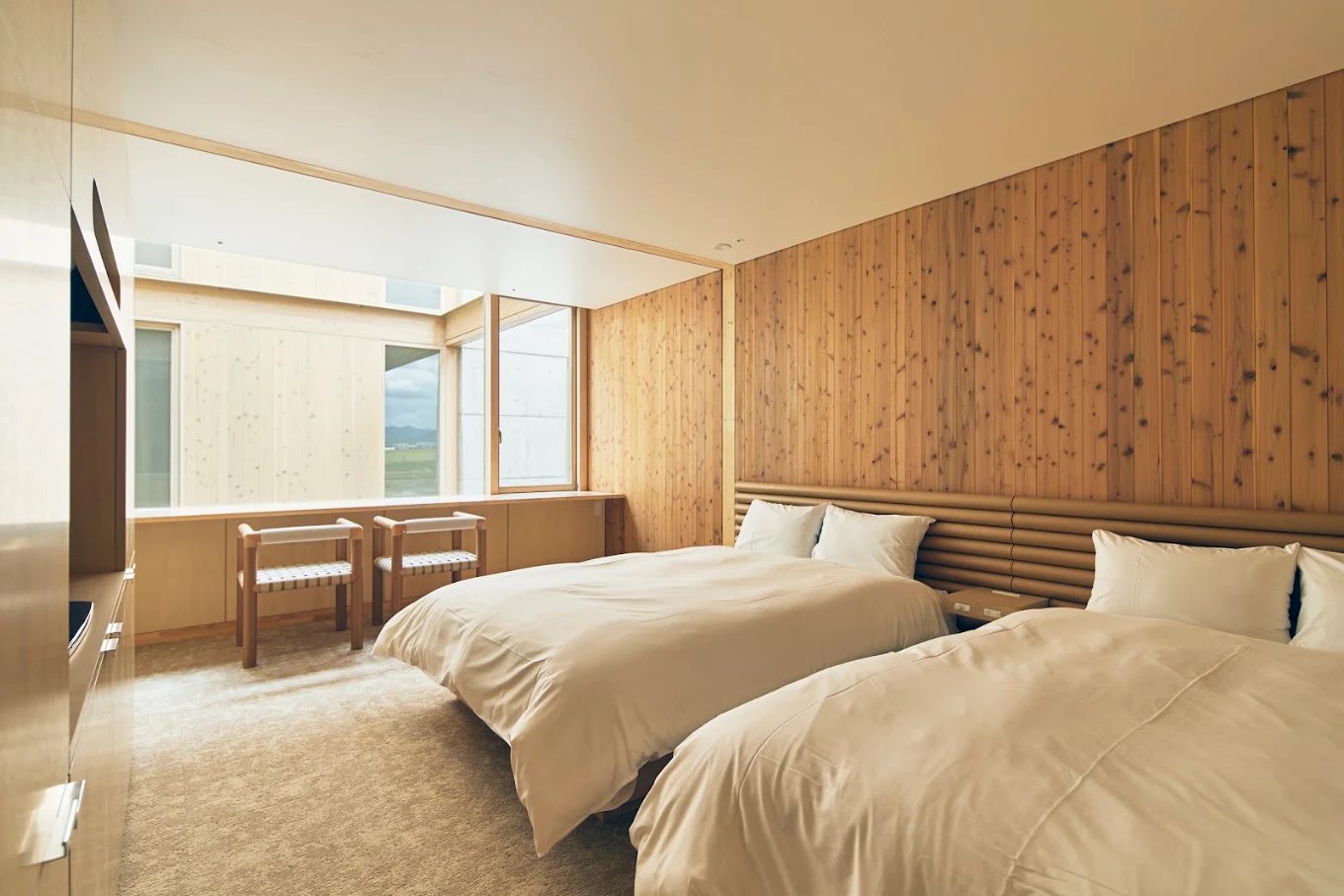
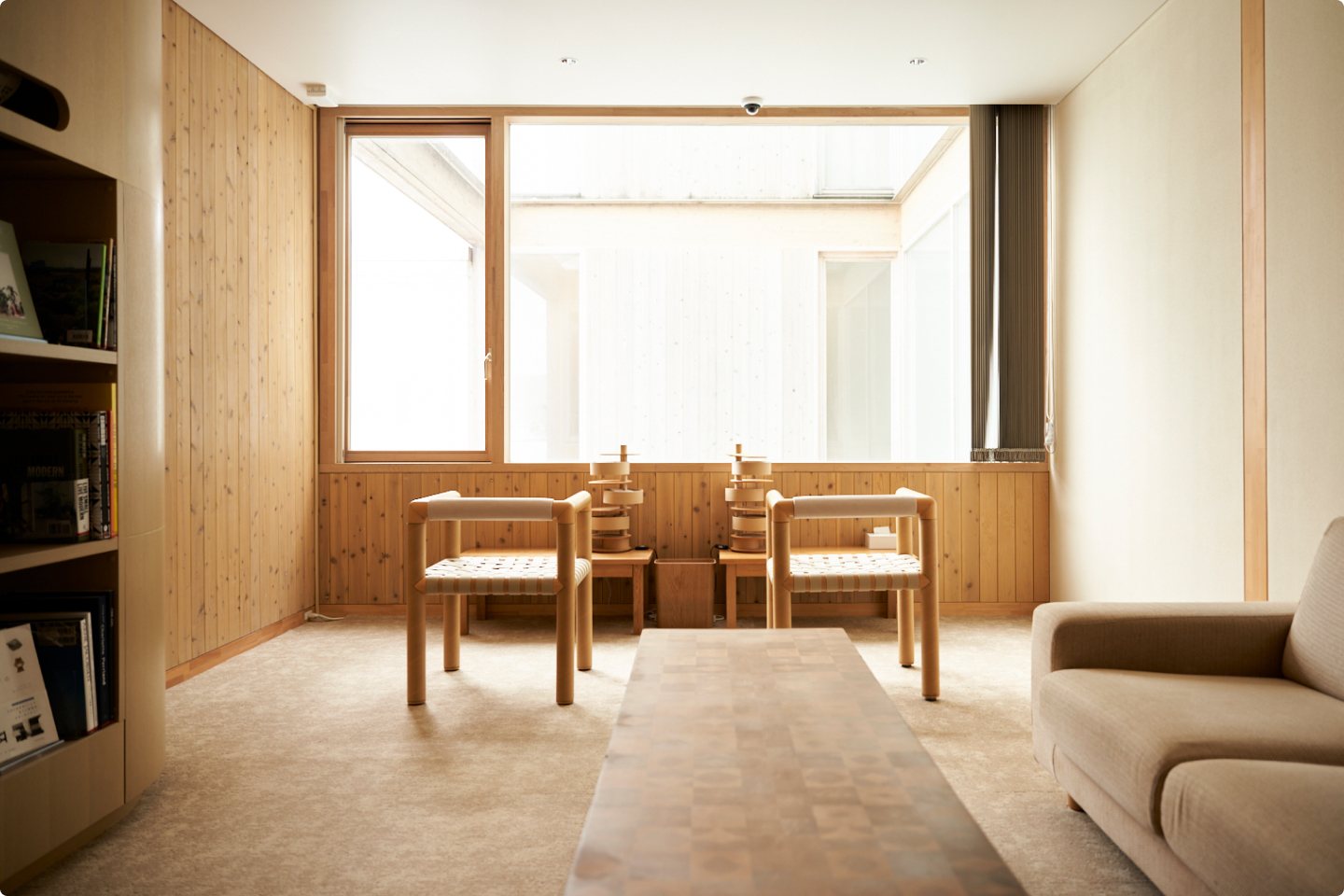
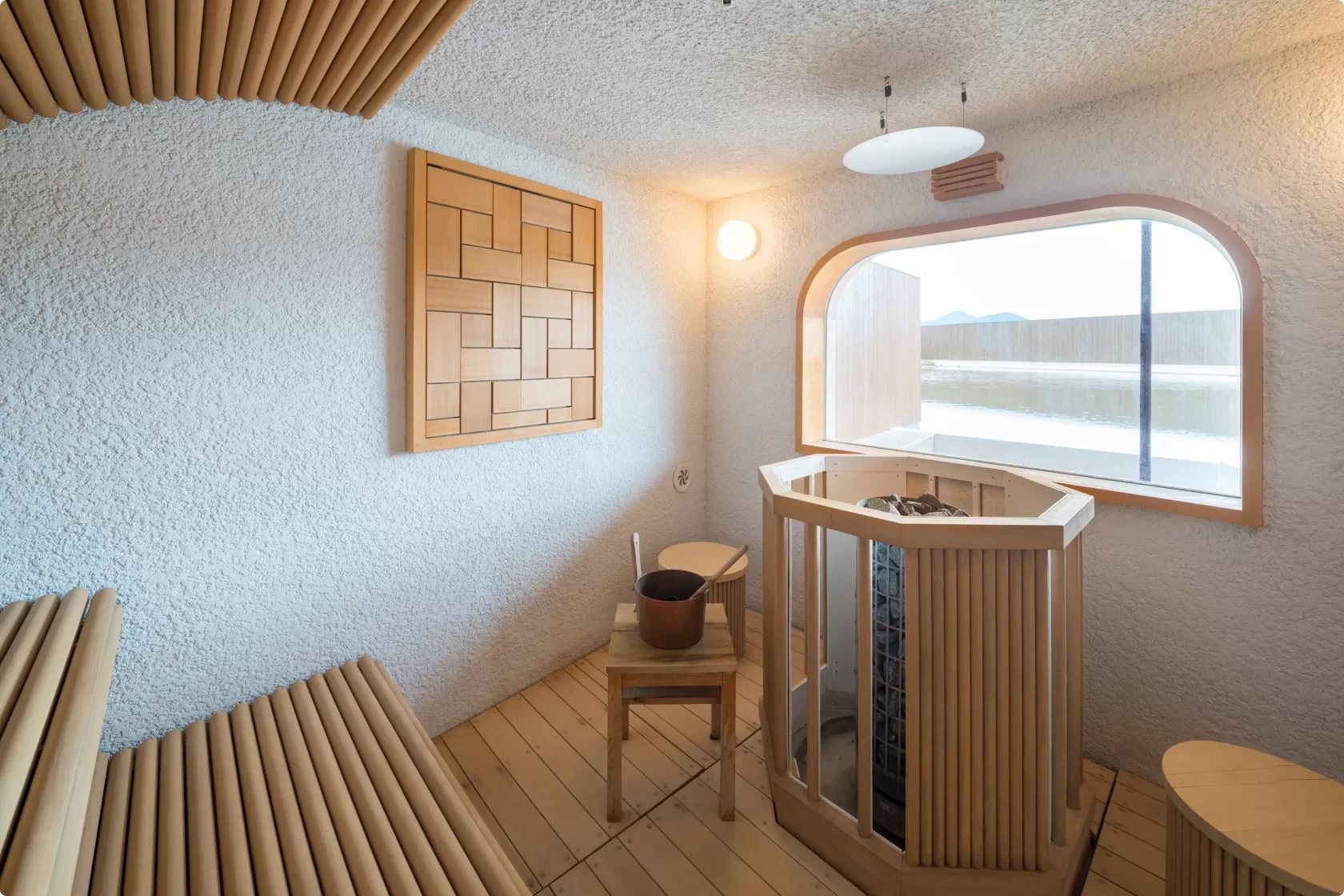
We meet in Tokyo, then fly north together to Shonai, where the rice fields spread out below the mountains, and settle into a premium hotel among them.
The first full day is spent at a Zen temple. Local teachers introduce the group to zazen, the seated meditation at the heart of Zen, and to walking meditation, prayer and a meal eaten with the full attention the temple gives to everything. Before the mountains ask anything of you, the temple teaches you to slow down enough to listen.
Walking with the Yamabushi
Then we go up. For two nights, the group lives at Master Hoshino’s pilgrim lodge. Meals are shojin ryori, the mountain cuisine, eaten in silence, each mouthful chewed slowly as a meditation of its own.
Imagine entering the forest without the things that usually tell you who you are: no title, no schedule to manage, no distractions, very little conversation. Training here can mean walking in silence, following your guide without a watch and answering every instruction with uketamo. Depending on the season and the teacher, it can also include chanting and purification beneath a waterfall.
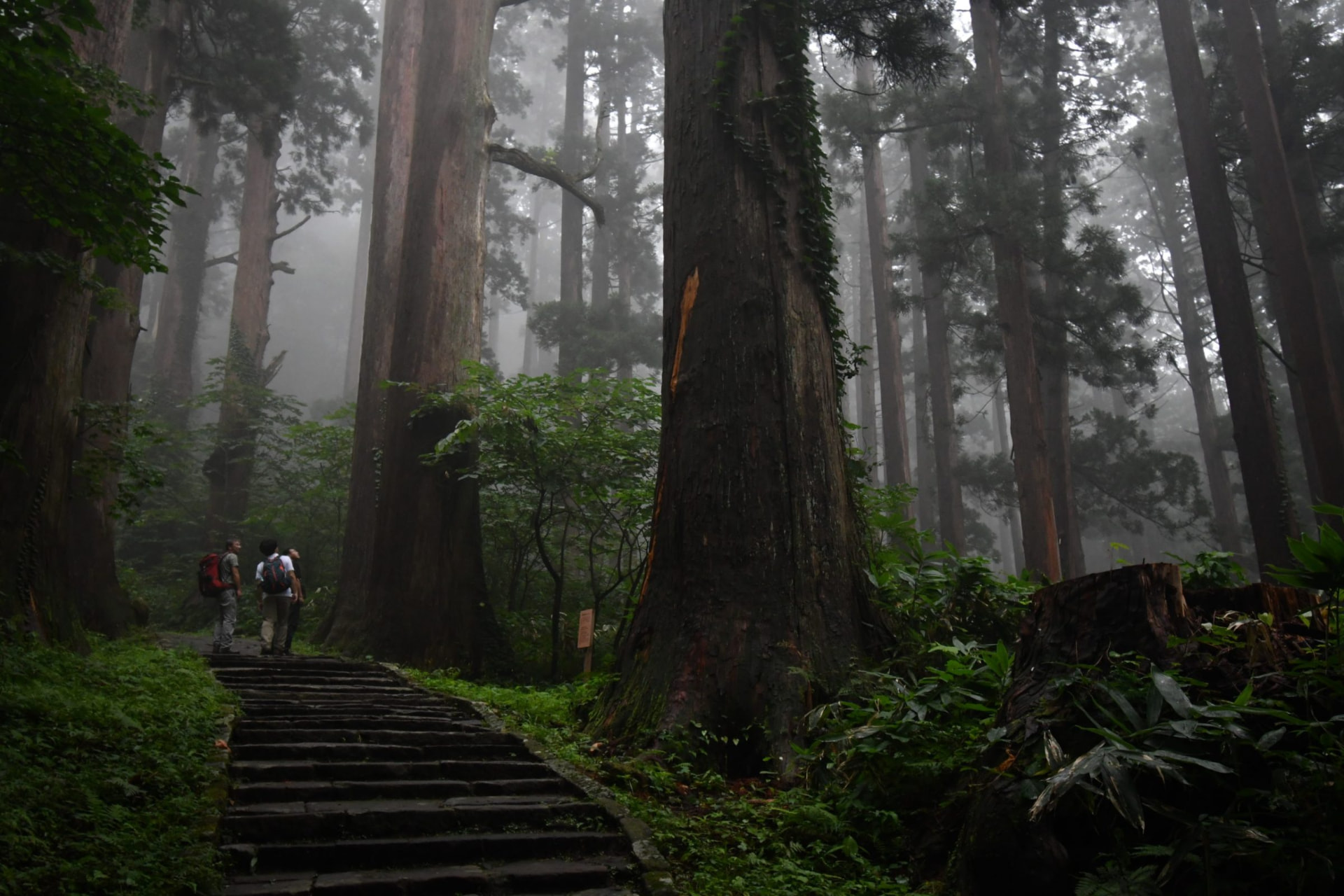
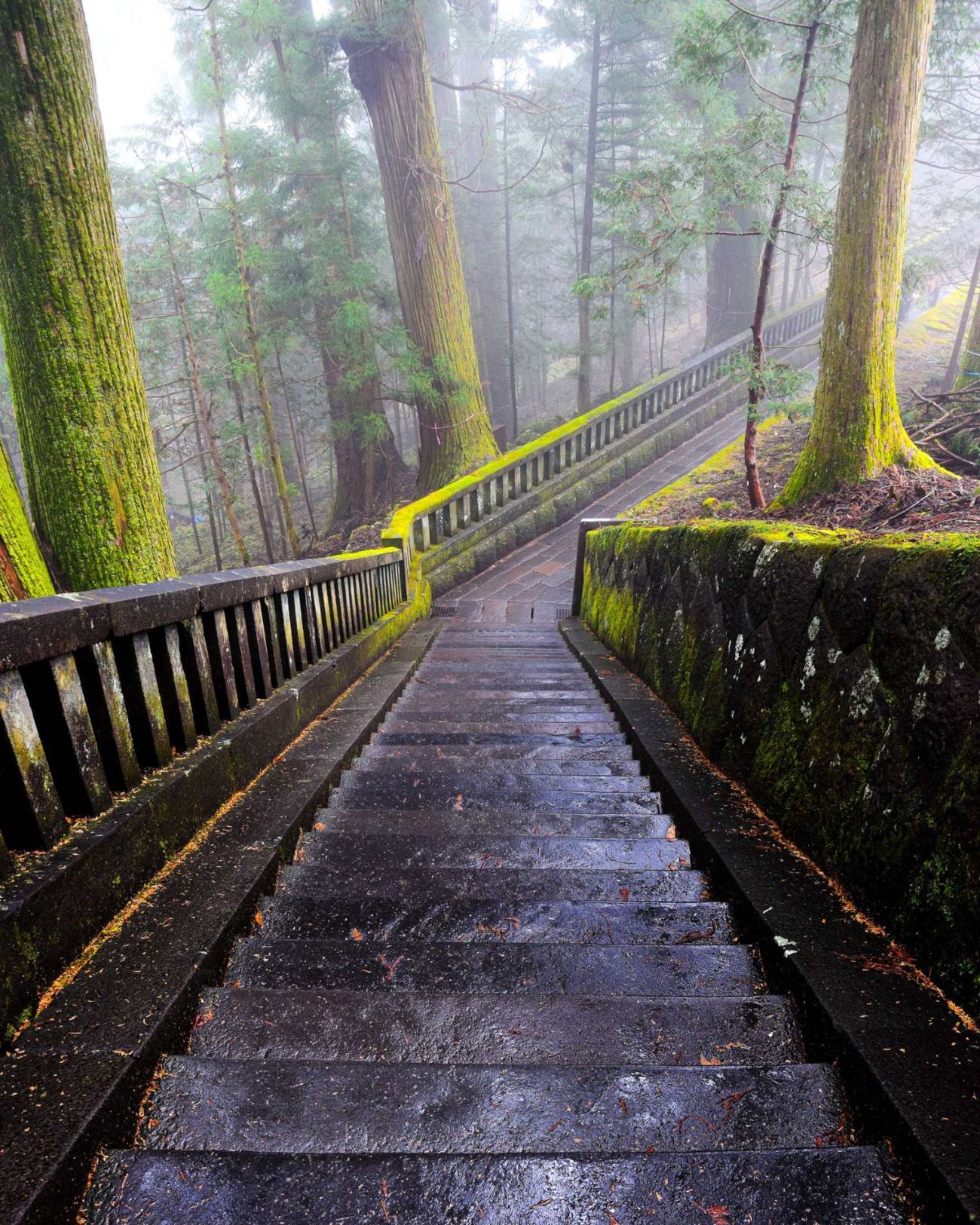
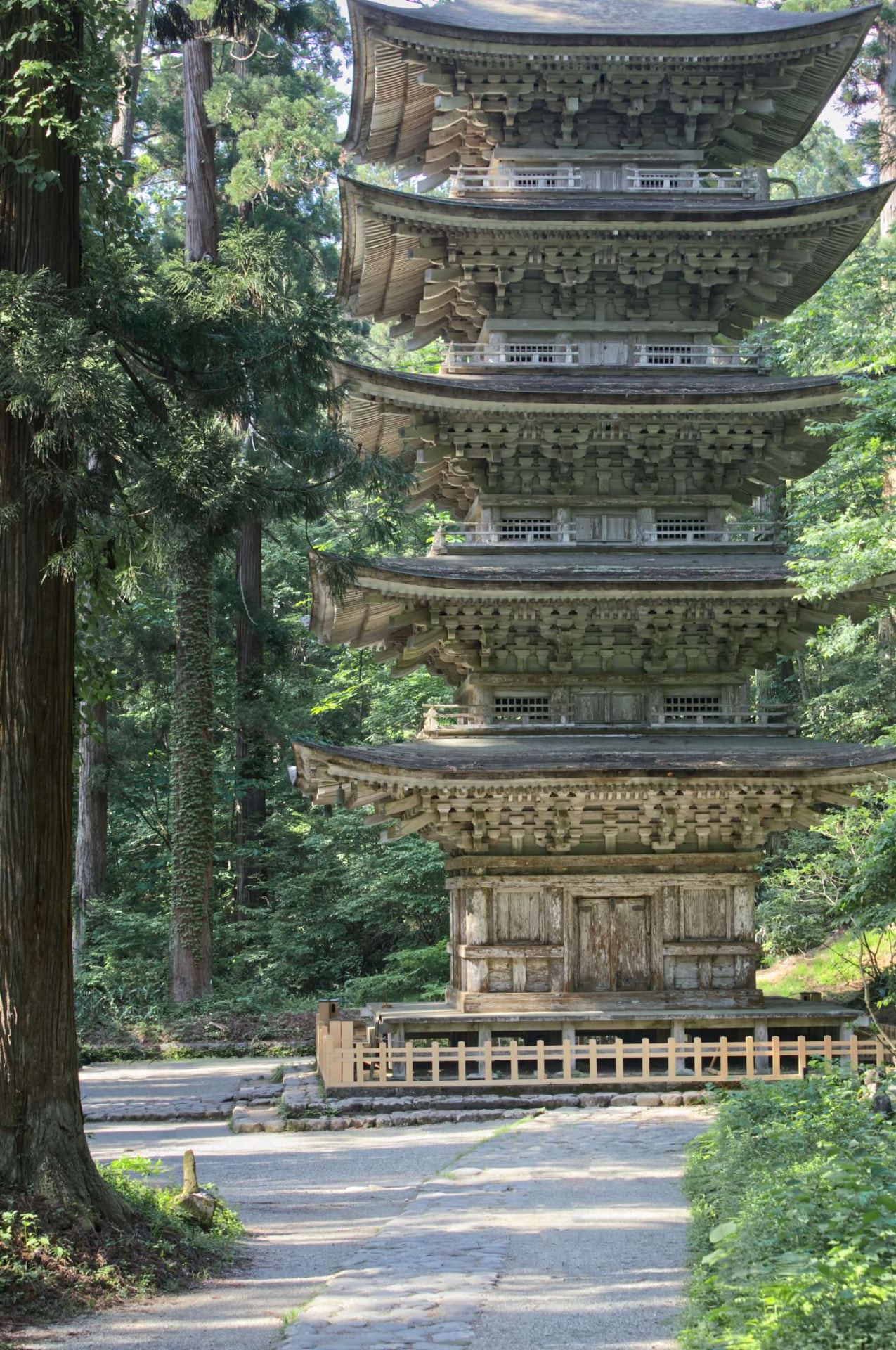
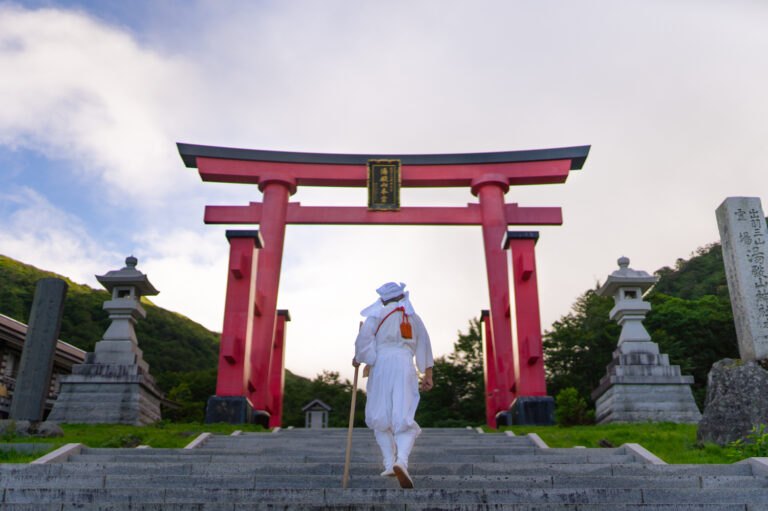
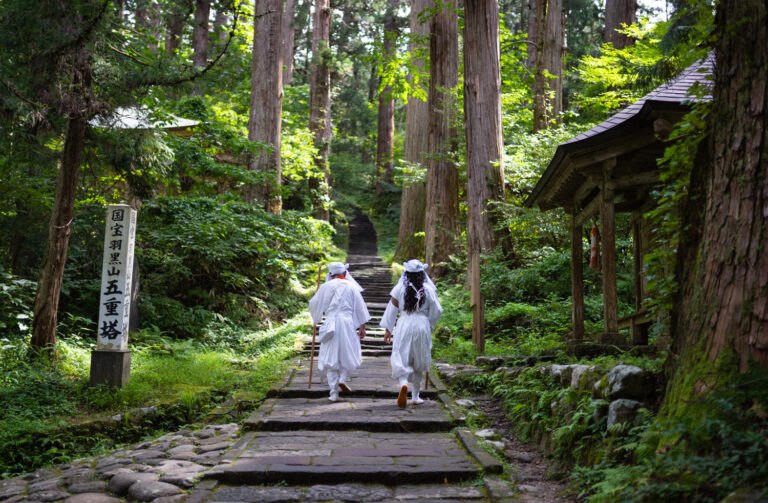
Mount Haguro, the present, begins at a carved wooden gate, where pilgrims bow to the guardian spirits of the mountain. Then, unexpectedly, the path goes down. In Yamabushi lore, that first flight of stone steps is a descent into hell, and the long climb that follows, across a river and up through the trees, is the way back to life. The 2,446 steps run beneath an avenue of cedars planted in the 1600s, past a five-storied pagoda and more than a hundred small shrines. At the summit, pilgrims have offered bronze mirrors to a small sacred pond since around the eighth century.
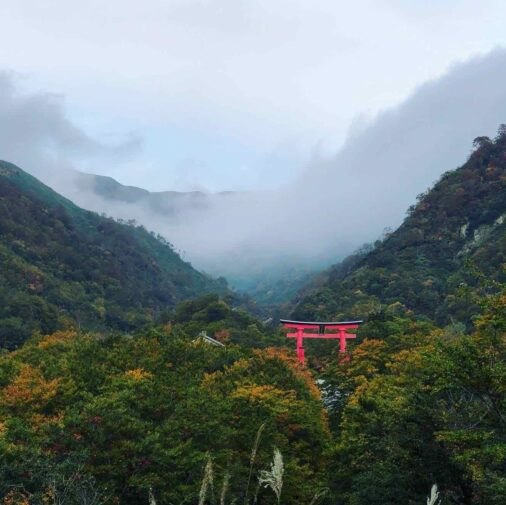
From Haguro, the pilgrimage moves on to the other two mountains. Mount Gassan, at 1,984 meters the highest of the three, is the past, the realm of ancestors, where pilgrims meet impermanence face to face. Mount Yudono is the future, the most secret of the three, where rituals take place around a natural hot spring.
The Yamabushi climb in white, carrying a tall wooden staff that stands for a grave marker in the ritual of rebirth. In the language of the pilgrimage, you climb Gassan to die and descend Haguro to be reborn. It isn’t really about the summits. It’s about what happens to you along the way.
What would you set down on the mountain, and leave there?
Beginning Again
After the mountains, the group comes back down to the rice fields for a free evening, a hot bath and a long night’s sleep.
The next day we return to the Zen temple, this time for integration: meditation, mindful eating, and time as a group to share what happened on the mountains and what you want to carry home. Having sat at the start of the week as a beginner, you sit again at the end and notice what’s changed. That evening, there’s a celebration dinner to close the week. Then a short flight south to Tokyo, a last night together, and home.
Along the way there are sessions with Abroad faculty, conversations on the trail and evenings that leave room for whatever the mountains stirred. A professional photographer travels with the group, so you can keep your attention on the climb and leave the pictures to someone else.
The Details
Dewa Sanzan is remote by Japanese standards, and the pilgrimage is a real one. We take care of every piece of it, from flights to and from northern Japan and every transfer to the meals at the lodge and guides who travel with the group, so your attention can stay on the mountains and the teachers.
You stay in premium hotels in Tokyo and among the rice fields, with two nights of pilgrim-lodge simplicity in between. Groups are small and thoughtfully composed. Before you go, you’ll be prepared for the climbs and the practices, and when you come home there’s space to make sense of them.
Expect long days on mountain trails and stone stairs, simple rooms and shared bathing at the lodge, early mornings and long stretches of silence. The comfort on either side is there so you can give the mountains everything.
Giving Back
This Quest is built on relationships with the people who keep these traditions alive. Part of what you invest goes directly to the teachers, temples and pilgrim lodges who welcome you, so being there helps sustain the practices you came to learn from.
Access creates responsibility. The relationship doesn’t end when the trip does.
Go to Japan with Abroad
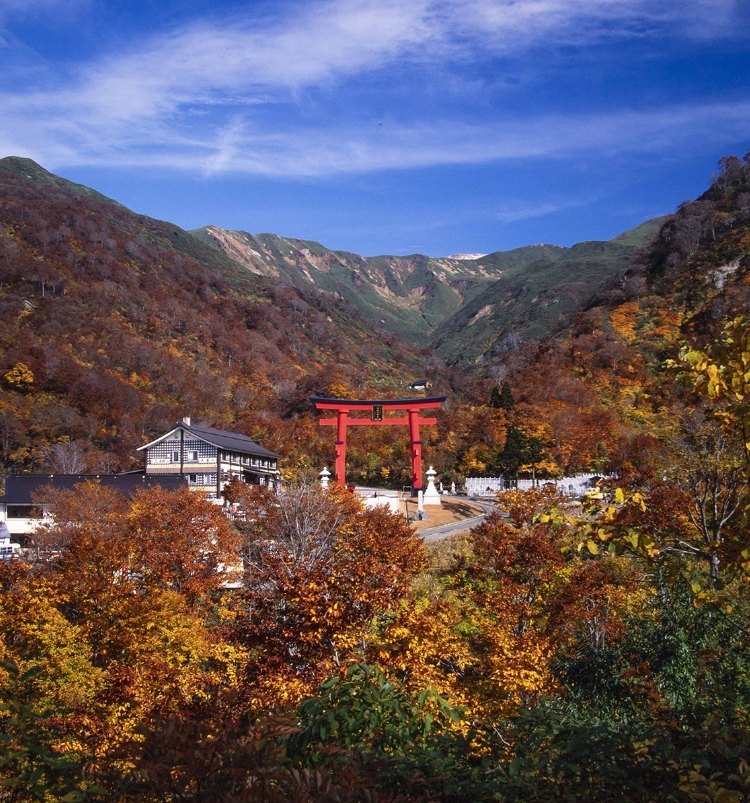
The first Abroad Japan Quest is planned for October 2027, when the forests on the three mountains turn red and gold.
October 2–10, 2027
Japan Quest: The Three Sacred Mountains
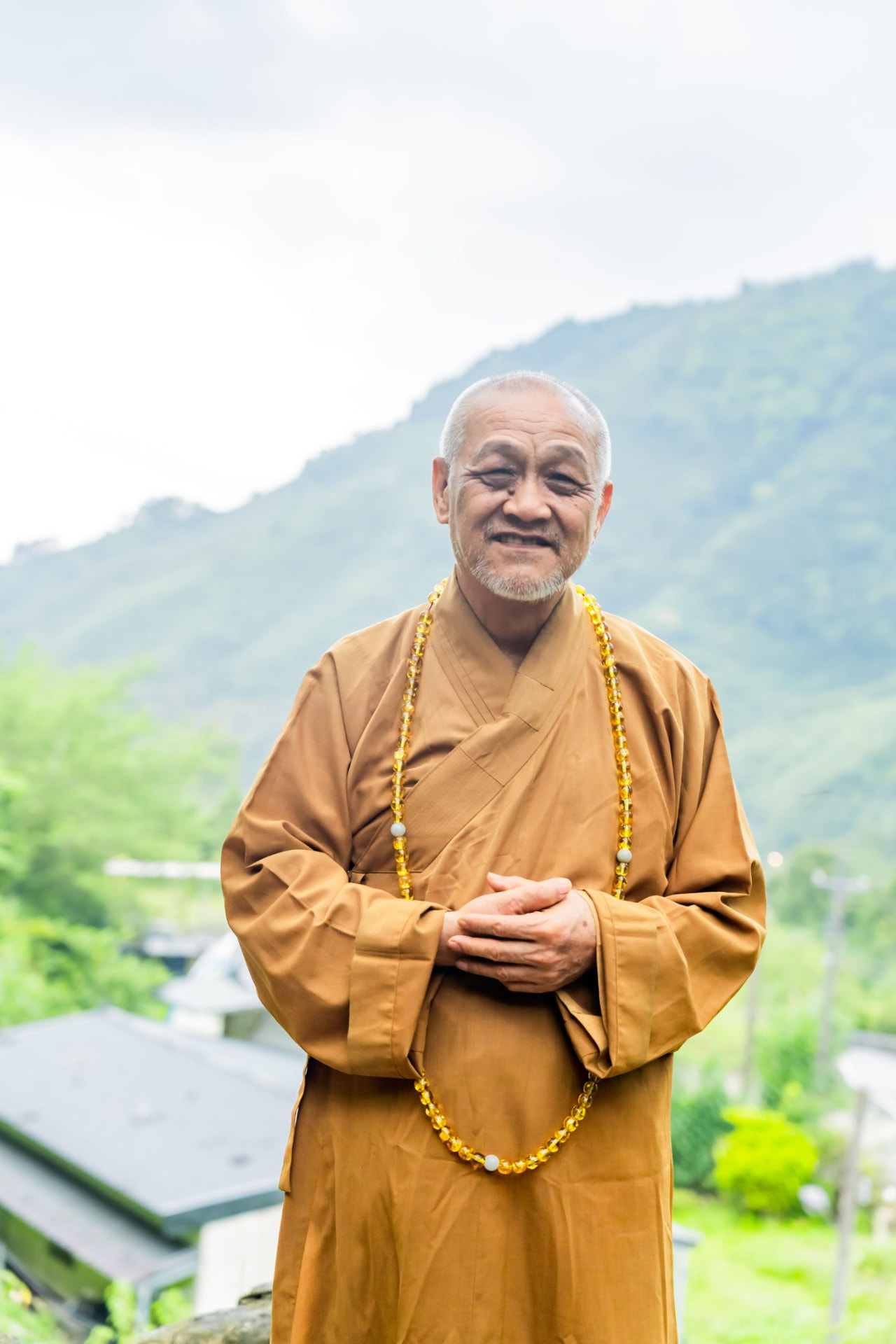
With Tak-san and Master Hoshino
View This Experience →